
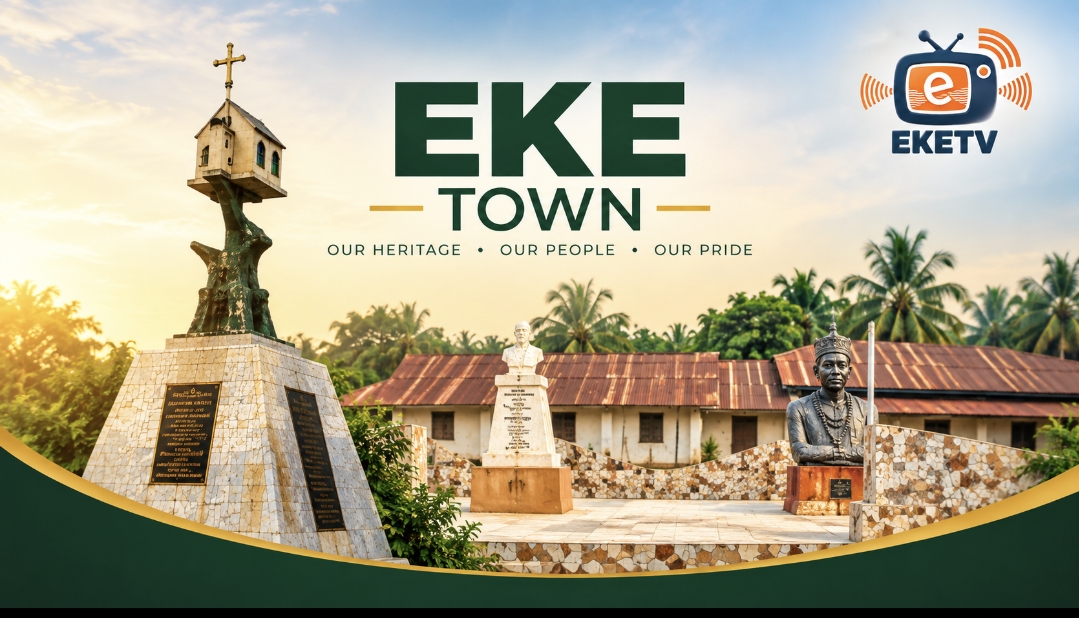
EKE UNITE PART TWO: THE STRENGTH OF EKE LIES IN OUR UNITY — FROM INDIVIDUAL SUCCESS TO COLLECTIVE EMPOWERMENT
Turning Access, Influence and Opportunity into a Ladder for Ndi Eke
By Ike Enemoh | Eke TV
Part One examined the importance of Eke’s identity, the need to rise above political divisions and village sentiments, and the importance of building a common voice.
But unity must go beyond words.
Unity must produce results.
It must create opportunities.
It must strengthen relationships.
It must open doors.
And most importantly, it must create a culture in which the success of one Eke person becomes an opportunity for another…
WHAT CAN UNITY DO FOR EKE?
A united Eke can have a stronger voice.
A united Eke can negotiate more effectively.
A united Eke can present clear priorities to government.
A united Eke can advocate more effectively for political representation.
A united Eke can build stronger relationships with political leaders without becoming the property of any political party.
A united Eke can create opportunities for its young people.
A united Eke can support education, entrepreneurship and professional development.
A united Eke can develop a culture where successful people deliberately create opportunities for those coming behind them.
Most importantly, unity can give Eke collective bargaining strength.
When people speak together, their voice is easier to hear.
When people organize around clear objectives, their demands become clearer.
When people are united around development, political differences become less capable of distracting them from their common interest.
Imagine an Eke that sits down before every election and identifies its priorities.
Imagine an Eke that welcomes politicians from different parties but tells all of them:
“We respect your political interests, but these are the things our community needs.”
Imagine an Eke that follows up after elections.
Imagine an Eke that does not simply give political support but also knows how to negotiate for development, jobs, appointments, education and opportunities.
That is what unity can begin to create.
AND WHAT CAN DISUNITY CONTINUE TO CAUSE?
Disunity can be costly.
Sometimes its consequences are obvious.
Sometimes they are not.
When people send conflicting messages, collective advocacy becomes weaker.
When villages negotiate separately on every matter, the larger community voice can become fragmented.
When political differences become personal, relationships are damaged.
When successful people are viewed only through the lens of village or political affiliation, their success may fail to become a wider community opportunity.
When people compete against one another rather than building together, opportunities that could benefit many can become limited to a few.
And when Eke does not have a sufficiently coordinated voice, others may determine the terms of engagement.
Disunity can make a community’s strength appear smaller than it actually is.
That is why unity should not be treated as a ceremonial word.
It is a practical necessity.
THE OTHER SIDE OF UNITY: EMPOWERING NDI EKE
There is another dimension to this conversation that deserves serious attention.
Unity is not only about speaking together.
It is also about lifting one another.
Eke has people who are privileged to have access to government.
Some have political connections.
Some have professional networks.
Some are business owners.
Some have relationships at the local government level.
Some have access to state government.
Some have connections at the federal level.
Some have built relationships outside Nigeria.
To every Ndi Eke who has been fortunate enough to occupy such a position, there is a simple message:
USE YOUR POSITION TO EMPOWER NDI EKE.
If you have access to the local government, go there and advocate for your people.
Ask about jobs.
Ask about appointments.
Ask about training opportunities.
Ask about programmes that can benefit qualified Ndi Eke.
Recommend people.
Introduce people.
Speak for people.
If you have access to the state government, go to the state and negotiate for Ndi Eke.
Advocate for jobs.
Advocate for appointments.
Advocate for opportunities.
Advocate for qualified young people who may not have the connections to reach the right people themselves.
If you have access at the federal level, go there too.
Speak for Eke.
Seek opportunities.
Identify qualified people.
Recommend them.
Connect them to institutions and programmes.
And if your network reaches beyond Nigeria, go international.
The world is full of opportunities in education, technology, business, investment, professional development, entrepreneurship and other areas.
When those opportunities come, ask yourself:
“Which Ndi Eke can I connect to this opportunity?”
That question alone can change lives.
GIVE NDI EKE THE OPPORTUNITY TO START
Sometimes people do not need someone to carry them.
They simply need someone to give them a chance.
Give someone an opportunity to start a business.
Give someone access to training.
Give someone a recommendation.
Give someone a professional introduction.
Give someone an internship.
Give someone a job opportunity where they are qualified.
Give someone the capital to begin.
Give someone mentorship.
Give someone access to information.
Give someone a platform.
Give someone the confidence that somebody believes in them.
Trust Ndi Eke.
There are capable people in Eke who are simply waiting for an opportunity to demonstrate what they can do.
When you give an Eke person a chance and that person succeeds, the success does not end with that individual.
It becomes a story about the person who believed.
It becomes a story about the family.
It becomes a story about Eke.
And perhaps most importantly, that person may one day turn around and open another door for somebody else.
That is how empowerment multiplies.
FROM “I HAVE ARRIVED” TO “WHO CAN I HELP ARRIVE?”
This should become part of our community culture.
When someone reaches a position of influence, the question should not only be:
“What can I gain from this position?”
It should also be:
“Who can I help through this position?”
If you become a commissioner, how many Ndi Eke can you mentor?
If you become a legislator, how many qualified people can you recommend?
If you become a senior government official, how many opportunities can you help make accessible?
If you become successful in business, how many young people can you train or employ?
If you develop international connections, how many Ndi Eke can you expose to those opportunities?
If you become influential, how many people can you help become influential?
That is the difference between occupying a position and creating a legacy.
Positions eventually end.
The impact created through them can continue.
TO BE CONTINUED…
Part Three — “The Eke We Want to See” — will look at the practical path forward: building a common community agenda, preparing the next generation, strengthening the culture of recommendation and mentorship, and creating an Eke where political differences do not prevent collective progress.
EKE UNITE — The strength of Eke lies in our unity.

One thought on “EKE UNITE PART TWO: THE STRENGTH OF EKE LIES IN OUR UNITY — FROM INDIVIDUAL SUCCESS TO COLLECTIVE EMPOWERMENT”