Nzuko Ozo Ndi Igbo Celebrates 7th New Yam Festival in Enugu, Champions Ozo Philosophy for Ethical Leadership
By Ike Enemoh | Eke TV
ENUGU — The Nzuko Ozo Ndi Igbo, Nigeria (NONIN), has used its seventh annual Iliji/Iwa Ji (New Yam Festival) in Enugu to renew calls for greater cultural integration among the Igbo and promote traditional values of integrity, communal responsibility and ethical leadership as possible answers to some of the challenges confronting contemporary society.
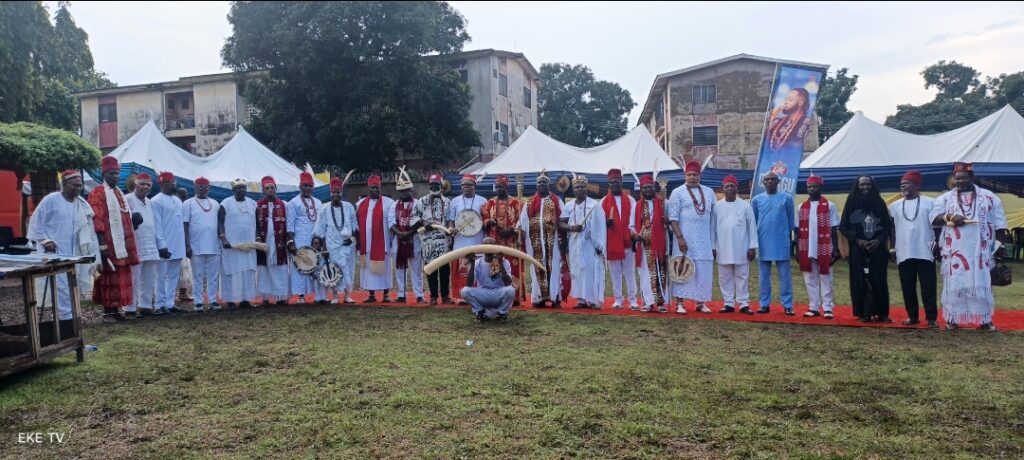
The festival, held on Saturday, September 19, 2026, at Tribe by Veronica, GRA, Enugu, brought together Ozo title holders, traditionalists, academics, cultural enthusiasts, community leaders and other stakeholders who used the occasion to reflect on the place of Igbo heritage in modern Nigeria.
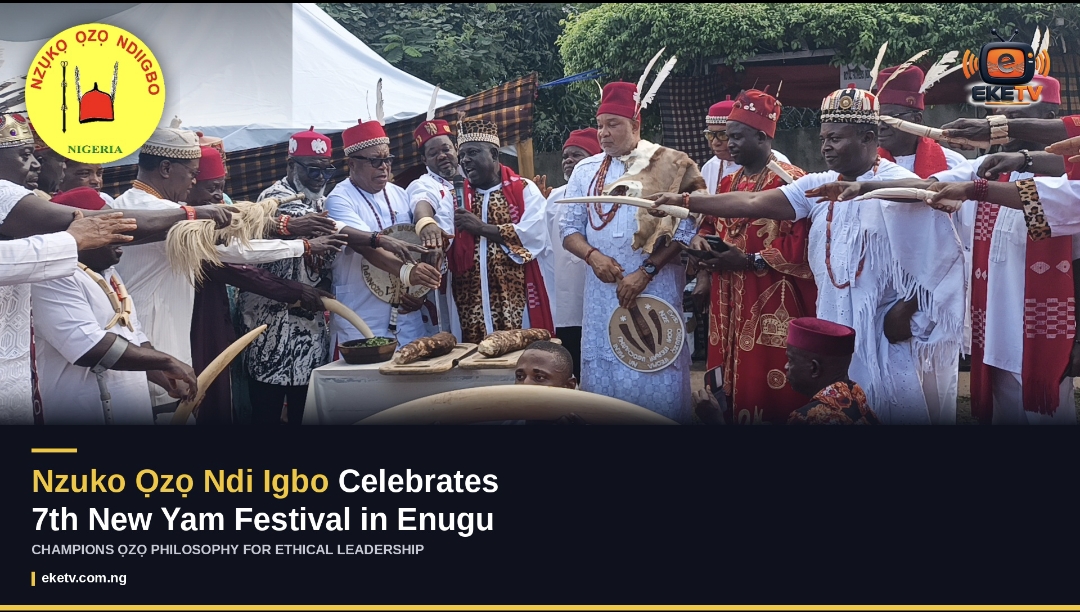
The event, which featured the ceremonial cutting of the new yam, Ufie music and dance, masquerade performances, Udubunch cultural displays, artistic presentations and cultural exhibitions, was organised around the theme, “Ozo Philosophy and Ethical Leadership – A Gift to the World.”
Speaking at the gathering, the National President and Onyeishi Ozo of Nzuko Ozo Ndi Igbo, Nigeria, Prof. Ike Oluka (Ozo Ohamadike), said the organisation was using the annual festival to promote a more integrated approach to Igbo cultural expression and strengthen bonds among communities.
Oluka said the decision to organise a common platform for the celebration was informed by concern over the fragmented manner in which new yam festivals are observed across Igboland.
According to him, while individual communities have continued to preserve their distinctive traditions, a broader, coordinated celebration could create a stronger cultural identity and deepen the sense of collective belonging among Ndigbo in Nigeria and the diaspora.
He said the long-term aspiration of the organisation was to see Igbo communities agree on a common date for the celebration of the new yam festival, describing such an arrangement as capable of giving the festival greater visibility and cultural significance.
The Ozo leader argued that the new yam festival should not be viewed merely as an occasion for entertainment, feasting and cultural display, but also as an opportunity for the people to examine their values, history, social responsibilities and aspirations.
Central to this year’s celebration was the Ozo institution, which Oluka presented as more than a traditional title or ceremonial distinction.
He explained that the Ozo philosophy is founded on the belief that society requires a moral framework anchored on truth, justice, dignity, communal responsibility and accountability.
In Igbo traditional society, the Ozo institution was associated with honour, responsibility and moral standing. The attainment of the title historically carried obligations that went beyond personal status, with the title holder expected to demonstrate integrity and serve as a custodian of communal trust.
Oluka therefore described Ozo as a philosophy of noble living, stressing that leadership within the traditional framework was expected to be exercised as service rather than domination.
He maintained that the philosophy places character ahead of material acquisition and responsibility ahead of privilege, adding that wealth without moral discipline, power without ethical restraint and development without concern for humanity could ultimately undermine society.
The National President also linked the discussion to contemporary Nigeria, saying the country needed leadership systems that placed greater emphasis on integrity, justice and responsibility.
He noted that many civilisations had developed distinctive philosophical principles that influenced their social organisation, leadership and collective identity, and argued that the Ozo philosophy could similarly provide an African contribution to discussions about ethical leadership and responsible citizenship.
Oluka said the philosophy should not be understood as an attempt to return society to the past, but as an opportunity to identify enduring values from Igbo civilisation that could be adapted to contemporary circumstances.
He urged Ndigbo, particularly younger people, to reconnect with their cultural heritage while rejecting criminality, violence, fraud and other activities that violate traditional moral standards.
The call extended to what he described as the growing “get-rich-quick” mentality, which he said was inconsistent with the traditional Igbo emphasis on hard work, enterprise, patience and achievement through legitimate means.
He urged parents, traditional institutions and community leaders to intensify cultural education for young people so that economic ambition would be matched by a strong sense of responsibility and moral conduct.
Also speaking at the event, renowned political scientist and former Director-General of the National Orientation Agency, Prof. Elochukwu Amucheazi, commended the organisers for giving the traditional institution room to evolve while retaining its cultural significance.
Amucheazi described Ozo as an important institution in the traditional governance structure of Igboland and argued that its relevance should be considered in the context of the historical development of Igbo society.
He recalled that becoming an Ozo title holder in earlier generations involved demanding social, economic and ritual requirements, with candidates traditionally expected to have attained a considerable level of maturity and established themselves within their communities.
He noted, however, that the demographic profile of people entering the institution has changed, with younger men increasingly becoming involved.
Rather than viewing the development solely as a threat to tradition, Amucheazi said the older generation had a responsibility to guide younger title holders so that the institution could evolve without losing its fundamental principles.
“Let them grow into it,” he said, stressing the importance of intergenerational guidance in sustaining traditional institutions.
The former NOA Director-General also spoke on the place of Ndigbo in Nigeria’s national development, noting that Igbo communities and individuals have established themselves in different parts of the country and across the international community.
He argued that the resilience and entrepreneurial activities of Ndigbo in different parts of Nigeria and the world demonstrated the capacity of the people to adapt to changing circumstances while maintaining their identity.
Amucheazi further called for patience in the process of national development, noting that meaningful political and social transformation requires sustained effort, education, organisation and gradual institutional development.
He expressed confidence that greater equity in the Nigerian political and social system would eventually emerge, while urging Ndigbo to remain committed to constructive participation in nation-building.
The New Yam Festival itself remained a major attraction at the event, with participants highlighting the central position of yam in Igbo traditional life.
Several Ozo title holders and participants who spoke with Eke TV described Iriji, or the New Yam Festival, as one of the most important cultural ceremonies among the Igbo because of the special place occupied by yam in the people’s history, economy and social life.
Yam has traditionally been regarded as the foremost of the cultivated tubers and a significant symbol of prosperity, labour and achievement in many Igbo communities. Beyond its value as food, the crop has historically been associated with farming prowess, social standing and the reward for hard work.
The arrival of the new harvest therefore provides an opportunity for communities to give thanks, celebrate agricultural productivity and acknowledge the labour of farmers before the new crop is publicly consumed.
The Iwa Ji, or ceremonial cutting of the yam, consequently carries significance beyond the physical act of cutting and eating the crop. It represents the formal recognition of a new agricultural season and serves as a cultural bridge between the old and the new.
At the Enugu celebration, the ceremony was complemented by Ufie music and dance, masquerade displays, traditional performances and other cultural activities that provided an avenue for participants to reconnect with different aspects of Igbo heritage.
The Udubunch cultural display and artistic performances added colour to the celebration, while interviews and cultural presentations provided further opportunities for discussions about the preservation and future of Igbo traditions.
The organisers said the continuation of the annual festival was part of their broader effort to ensure that cultural institutions remain relevant to younger generations and are not reduced to occasional ceremonial displays.
For the Nzuko Ozo Ndi Igbo, the 2026 celebration therefore combined the traditional significance of Iriji with a contemporary conversation about leadership, identity and social responsibility.
The message emerging from the gathering was that cultural revival, in the view of the organisers, should go beyond costumes, dances and ceremonies to include the values that shaped traditional society.
As the cutting of the new yam marked another harvest season, the organisers also used the occasion to advocate a renewed commitment to integrity, hard work, communal responsibility and responsible leadership, values they said could help strengthen both Igbo society and Nigeria’s broader national development.
By Ike Enemoh | Eke TV